

Welcome to Waitrose QR Code
UX / USER TESTING / USER JOURNEY / PRINT TO DIGITAL / QR CODES / E-COMMERCE
Overview
QR codes have the ability to bridge the gap between offline, for example print, and online content to potentially provide an interactive and more connected shopping experience. This potential however is hindered by past experiences, how they are perceived and the overall benefit to the customer. Where customers have been used to shopping in a certain way, it can then become difficult to introduce a new behaviour such as scanning a QR code, but with behaviours nudged due to the pandemic, I felt it was important to understand more within the context of Waitrose and the partnership.
Background
Waitrose have used QR codes in the past with limited success. This was a few years ago when the technology to scan QR codes wasn't readily available and the aesthetics of a QR code were deemed harsh and ugly. The aesthetic perception hasn't necessarily changed but the ability to scan has. People now have the ability to scan QR codes using the camera within most mobile phones. This has helped it to become a powerful and useful technology particularly during the Covid-19 pandemic. There are many use cases for QR codes and it was important to understand the benefit of these to our customers as well as the business, this is a bit of a dive into just one example.
Example Use Case
Welcome Booklet:
Print to Digital Book a Slot Journey
When a customer places their first order for delivery at www.Waitrose.com they will receive a printed welcome booklet to thank them for ordering with Waitrose and to help enhance their experience next time they order.
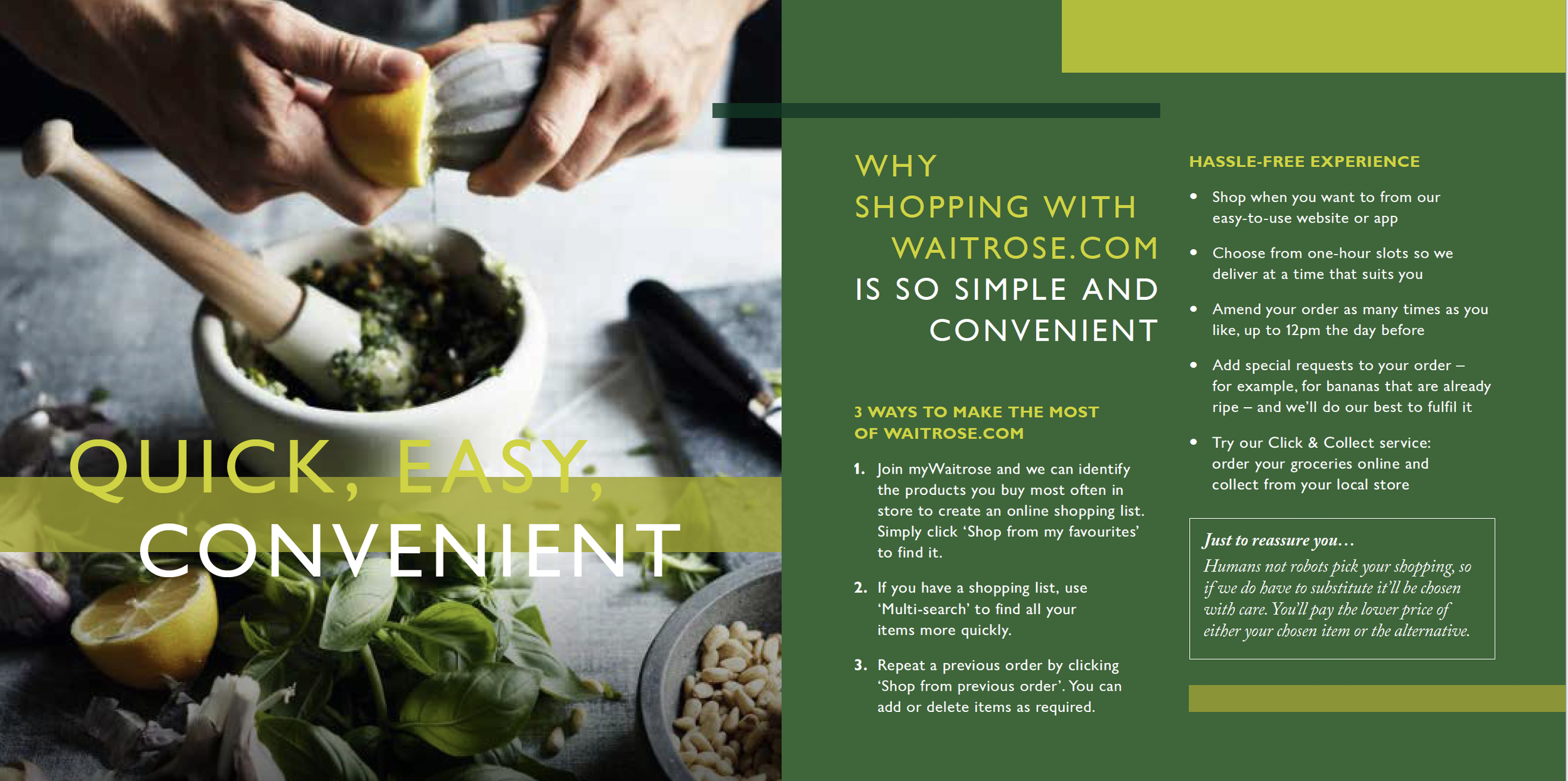
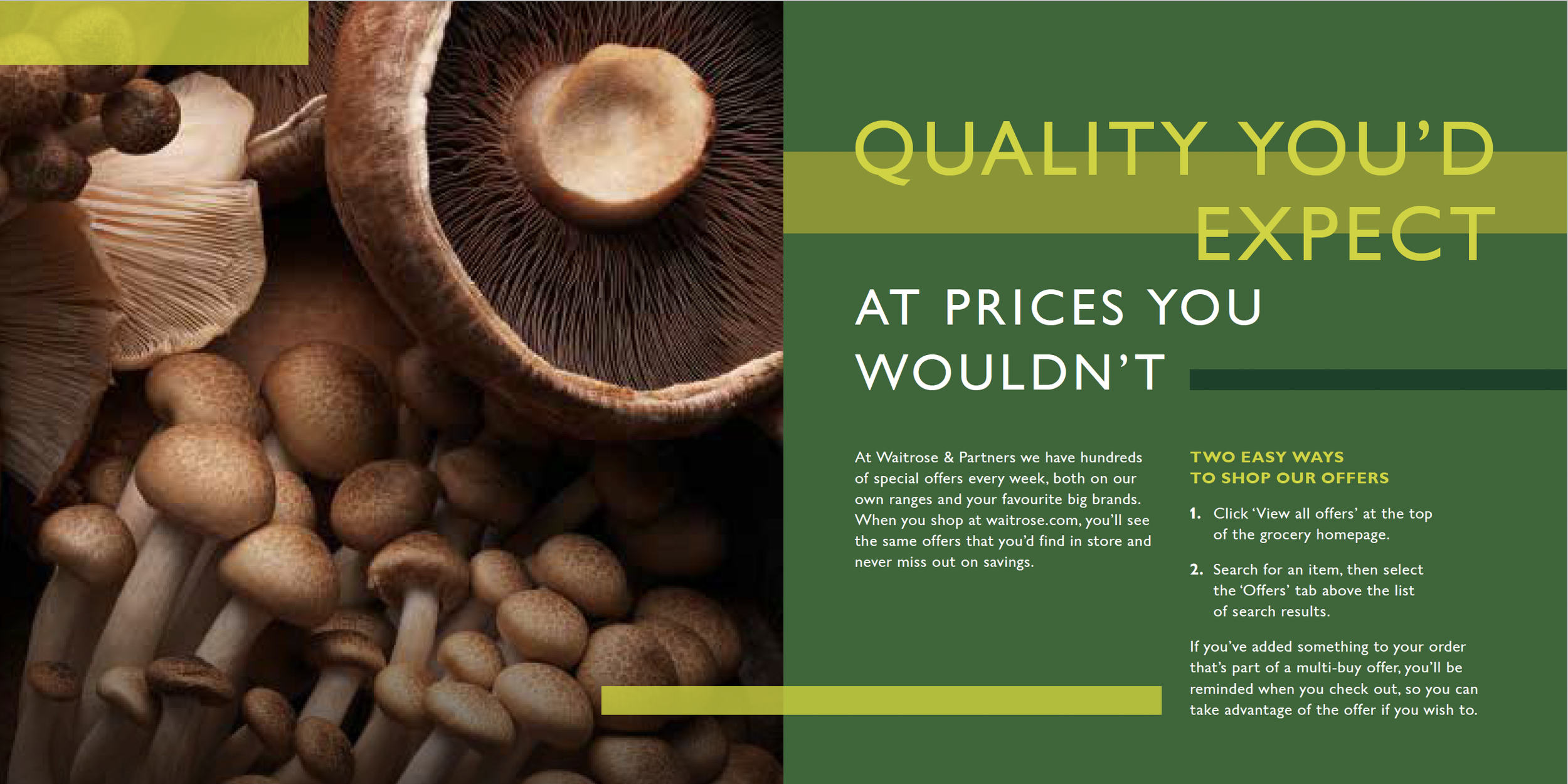
The Problem
Providing a printed booklet, as opposed to a digital email makes our customers feel special, especially with generations who hold value in print. This provides a challenge and a disconnected customer journey, particularly where the business is trying to encourage the customer to do their second online order but communicating this through the medium of print.
Approach
QR codes provide a connection between print and digital journeys. With QR code scanning capabilities now embedded into the cameras of newer mobile devices, and QR codes being used more and more during the Covid-19 pandemic to aid track & trace and social distancing, the general public are more aware of how to use them and the benefits QR codes provide.
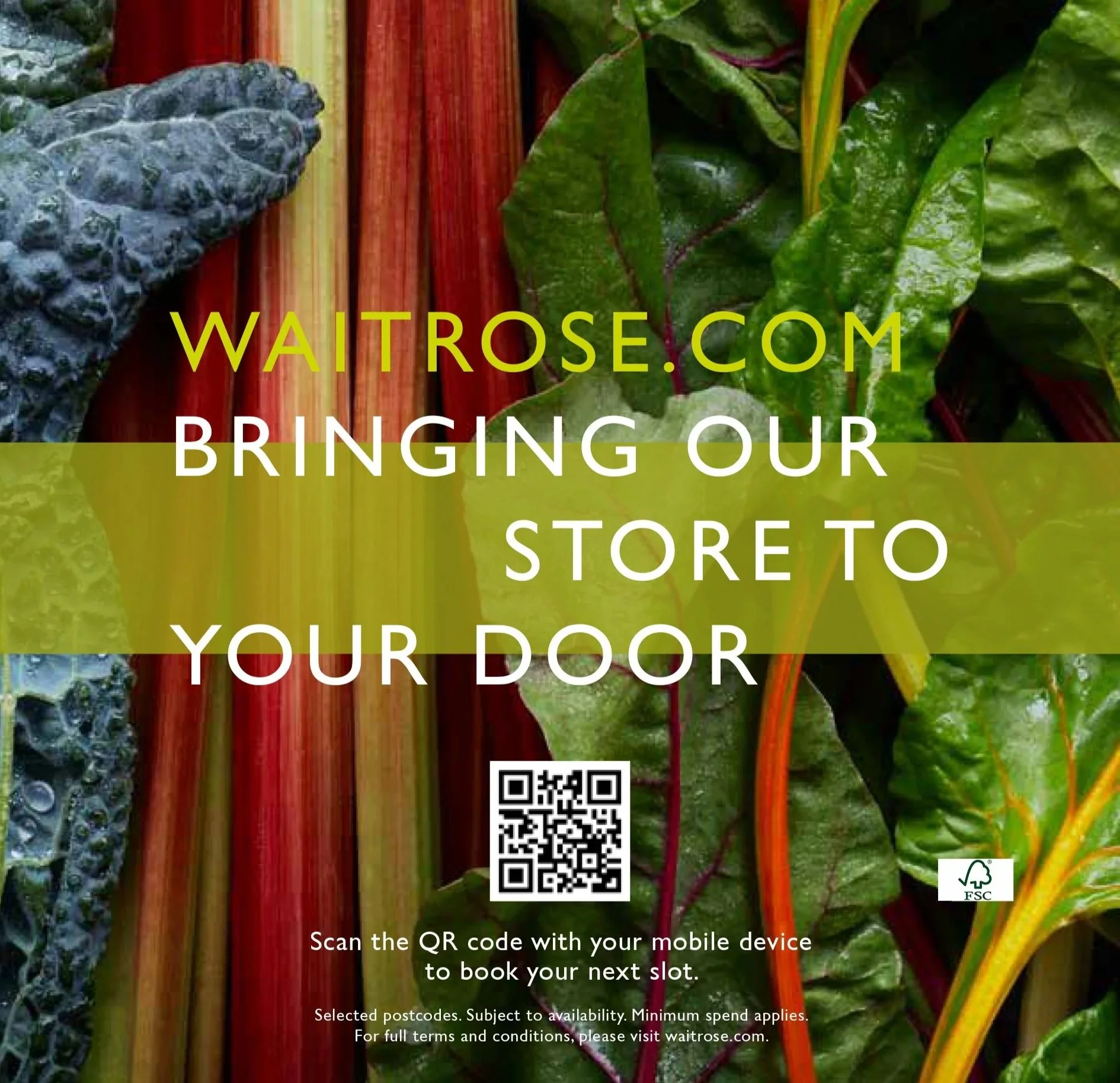
For the redesign of the Welcome Booklet, a QR code has been added to the back of the booklet almost as a call to action once they have read its' contents. Scanning the code, takes the customer through to booking their next delivery slot - asking them to log in before landing on that page if they are not already logged in.
Tracking
Tracking through Google Analytics has been added onto the QR code so that we can build up a picture of how customers are interacting with the booklet as well as understanding their level of engagement with using QR codes.
Best practice
At present, there are no WCAG standards for QR code readability but I wanted to provide the team designing the booklet some guidelines to ensure that it can be easily scanned by our customers from different distances. I recommended having the QR code at a minimum of 2 x 2 cm which would make it scannable at 30cm away.
The supporting text was also important because insights from previous user testing with our customers and QR codes proved that of there was too much information then the customer wouldn't read it, but too little and they wouldn't know what to do. the text is short yet concise and "mobile device" was chosen because it cover mobile phones and tablets.