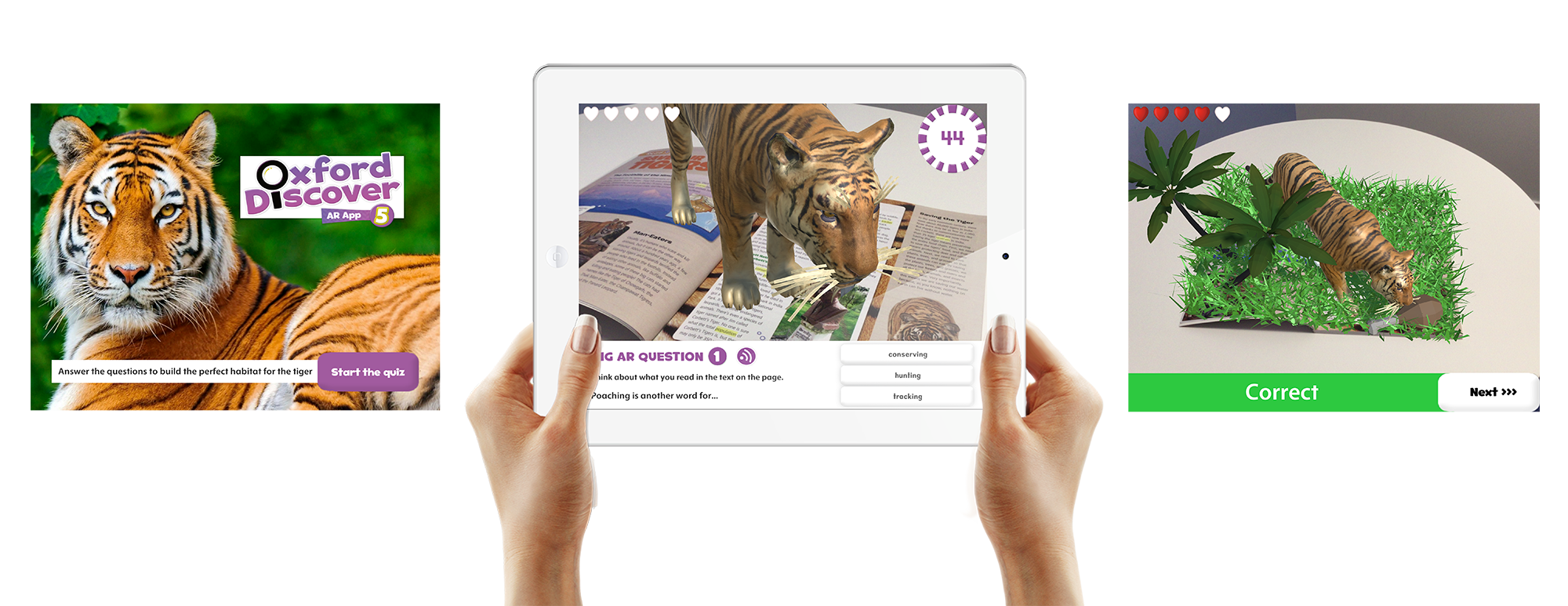
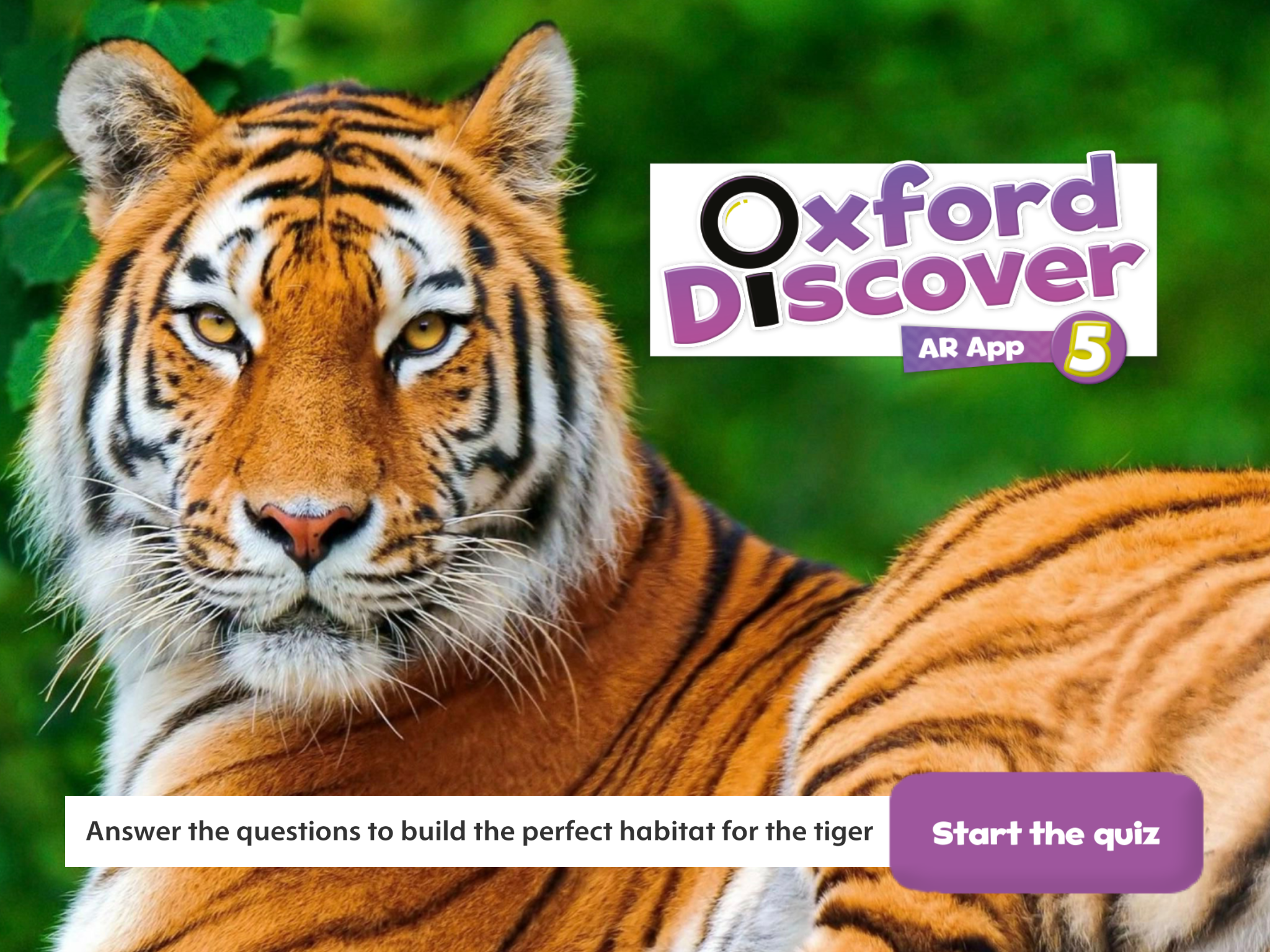
Oxford Discover
AR Proof of Concept
MOBILE APP / UX RESEARCH / AR / UNITY / VUFORIA / EDUCATION / GAMIFICATION
Proving print still has a future: bringing AR to English language teaching coursebooks.
Client
Oxford
University Press
Role
Design Lead
Date
2017-2018
Problem to Solve
How can OUP keep pace with technology when print coursebooks remain central to classrooms?
My Role
Self-initiated. I secured time to design and build an AR quiz prototype for one Oxford Discover Level 4 spread, and I led two designers in running a classroom test with 29 Year 6 pupils.
Results
24 of 29 pupils wanted more lessons like it (7.8/10 average). The findings and prototype went to OUP’s innovation team, whose search for a scalable partner culminated in the January 2019 MXRi announcement.
The Deep Dive
From a self-initiated idea to a classroom test to an OUP partnership.
Discovering the Opportunity
Print isn’t going away, so I looked for ways to bring it forward
Technology was moving fast, but printed coursebooks weren’t leaving classrooms any time soon. Rather than replace the book, I wanted to see whether augmented reality could add a new layer on top of the page.
What I set out to learn: how teachers and pupils would experience AR in a real lesson, and what added value it could bring to teaching and learning.
Developing the Idea
From sketches to a working prototype
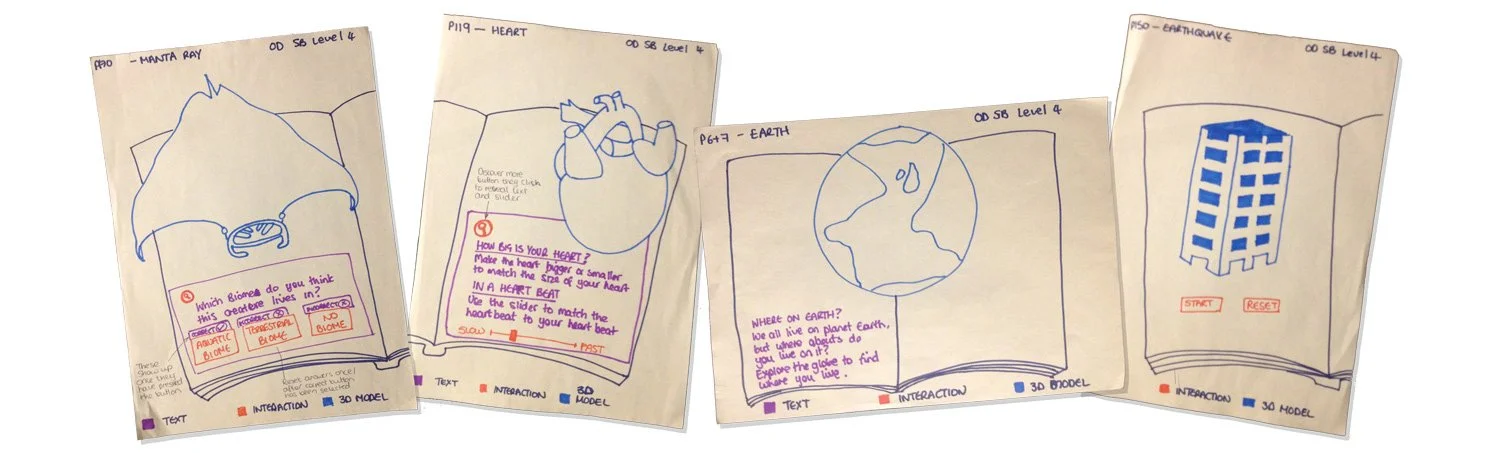
Before the project began, I had been exploring use cases for mixed reality in ELT materials, starting with low-fidelity sketches of how a printed page could come to life.
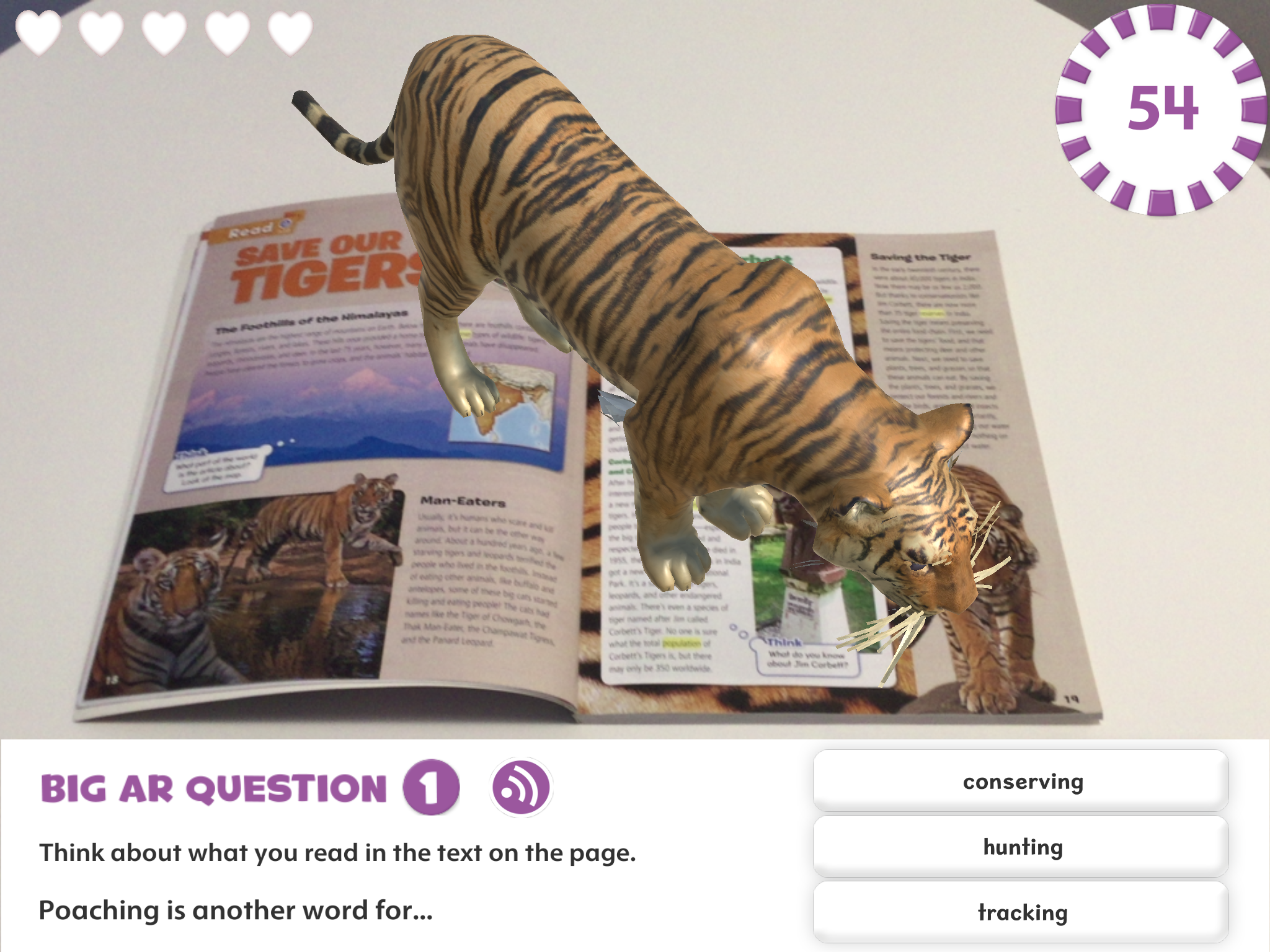
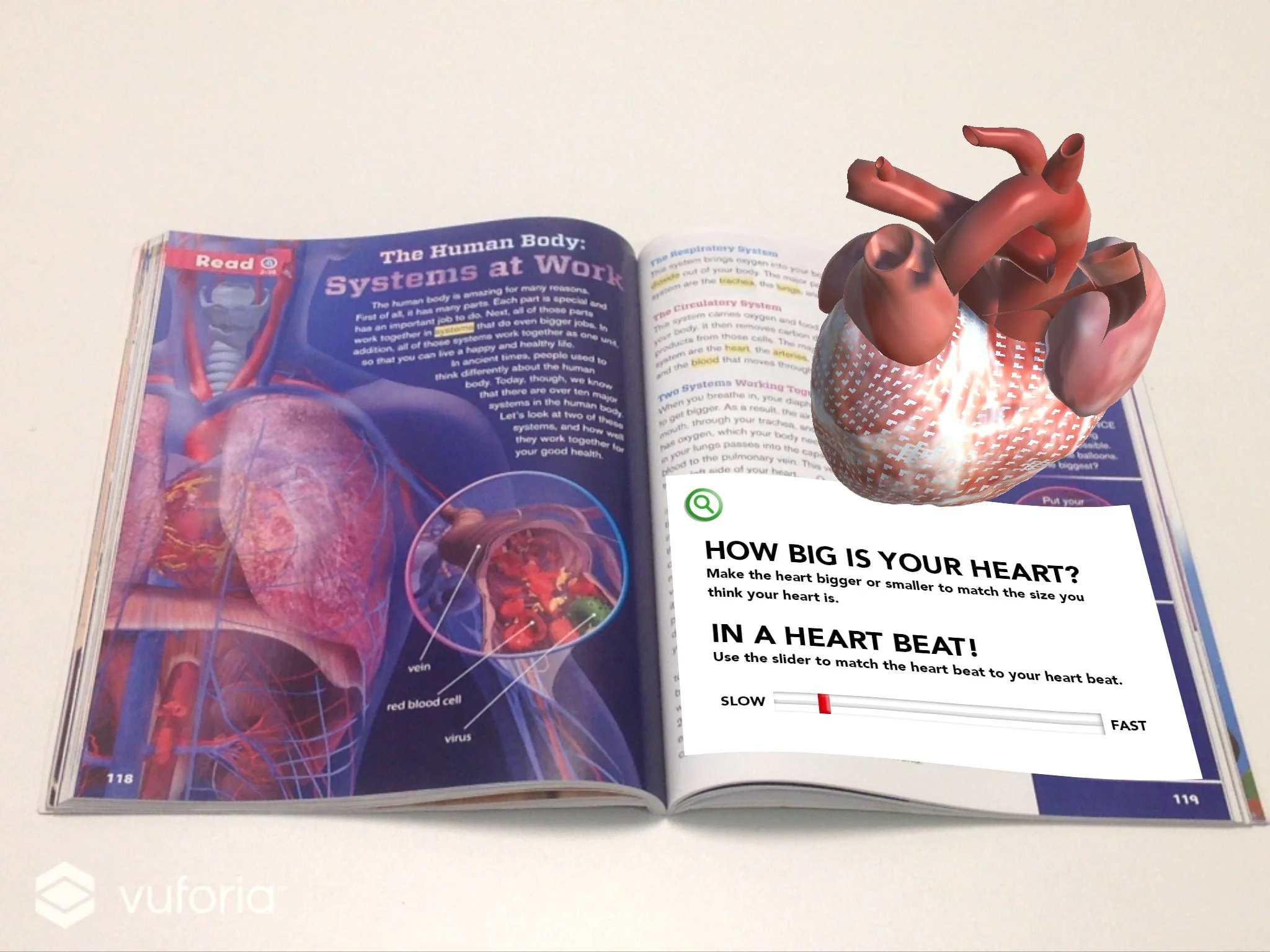
What started as curiosity quickly became a prototype to test in a classroom. I taught myself Unity and Vuforia to turn the sketches into a working, high-fidelity app, and worked with editorial, UX/UI and design colleagues to shape it. It supported a single spread in the Oxford Discover Level 4 course.
Gamification Architecture
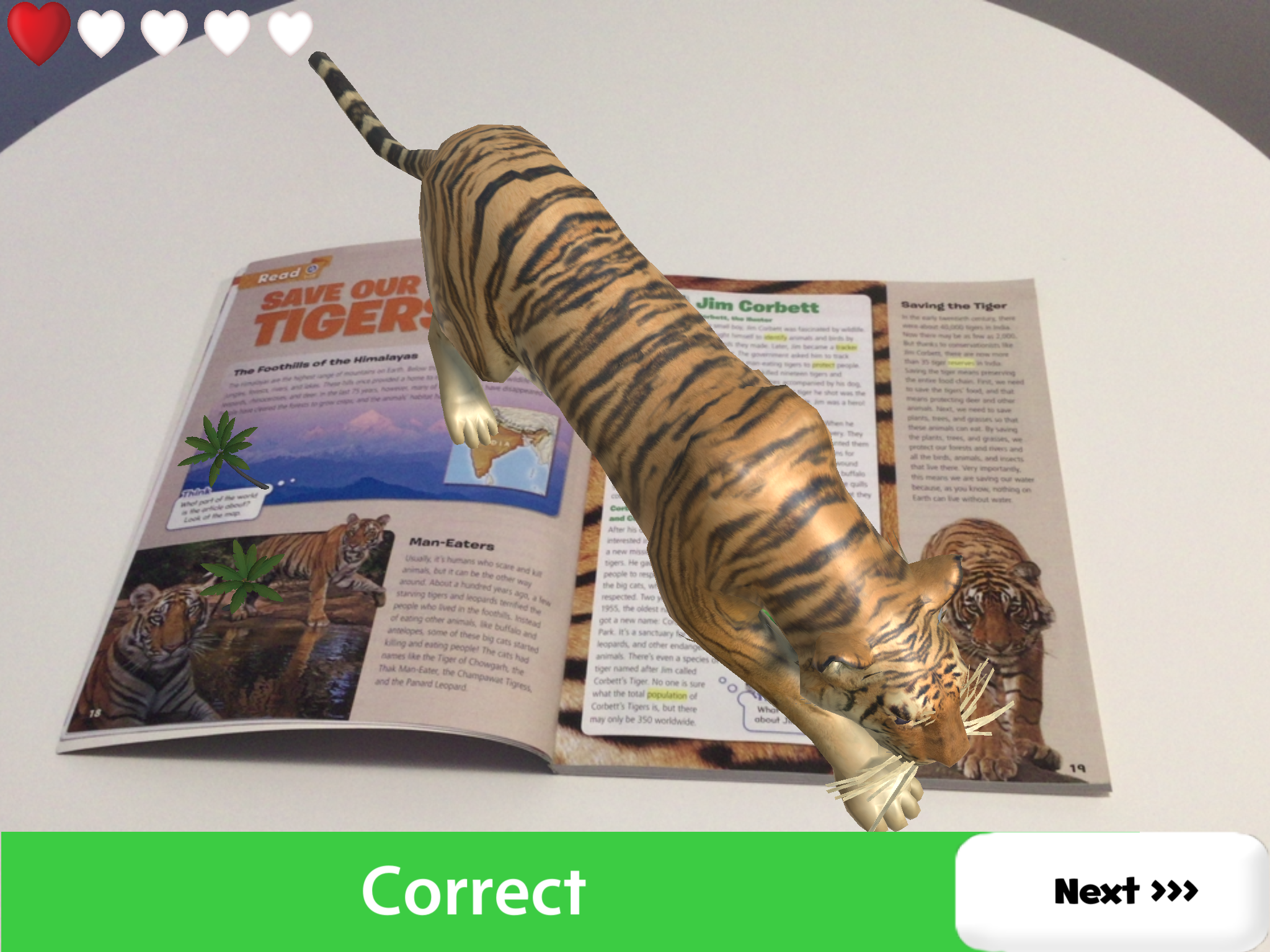
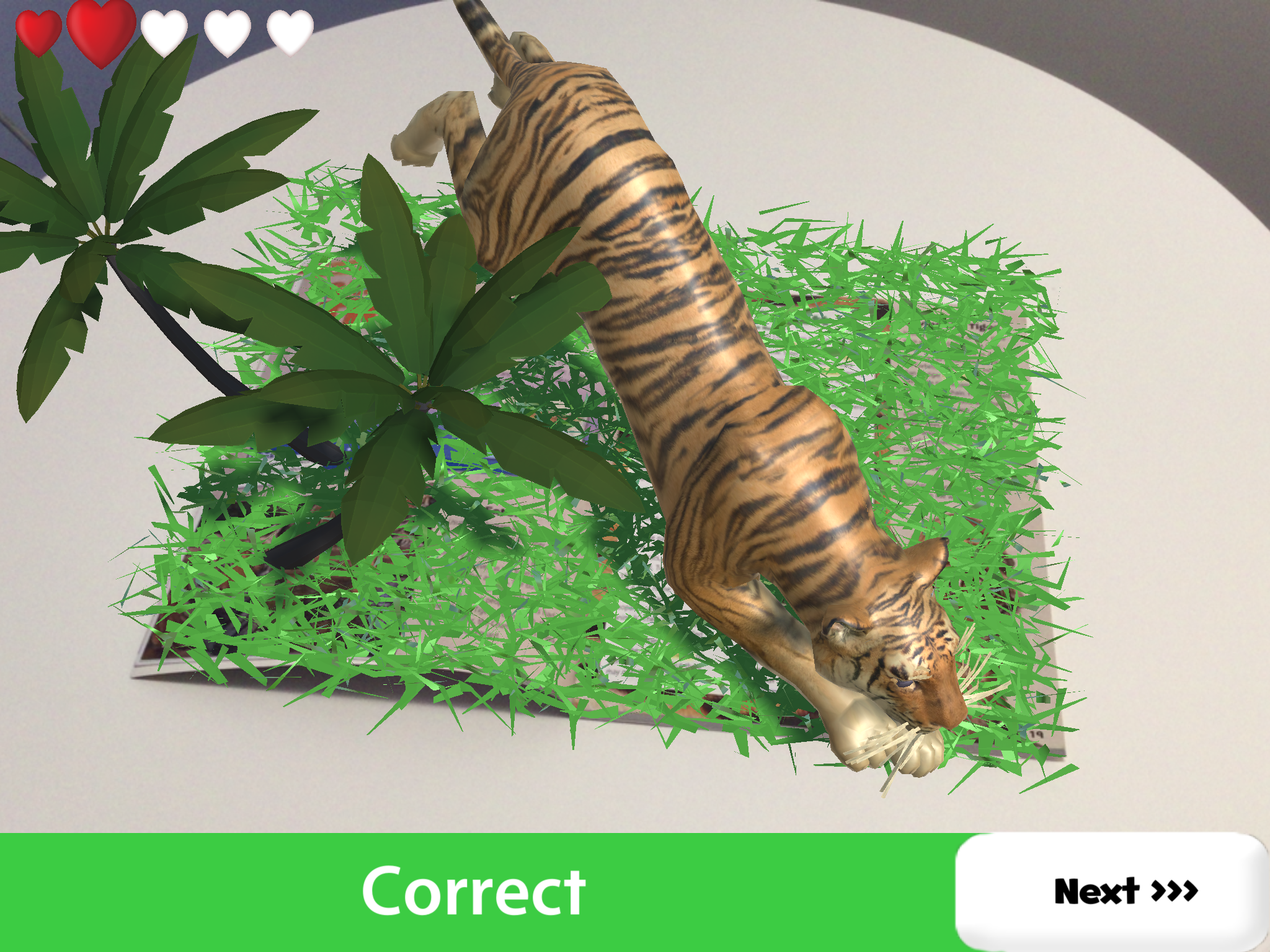
Rewarding right answers by building the tiger’s habitat
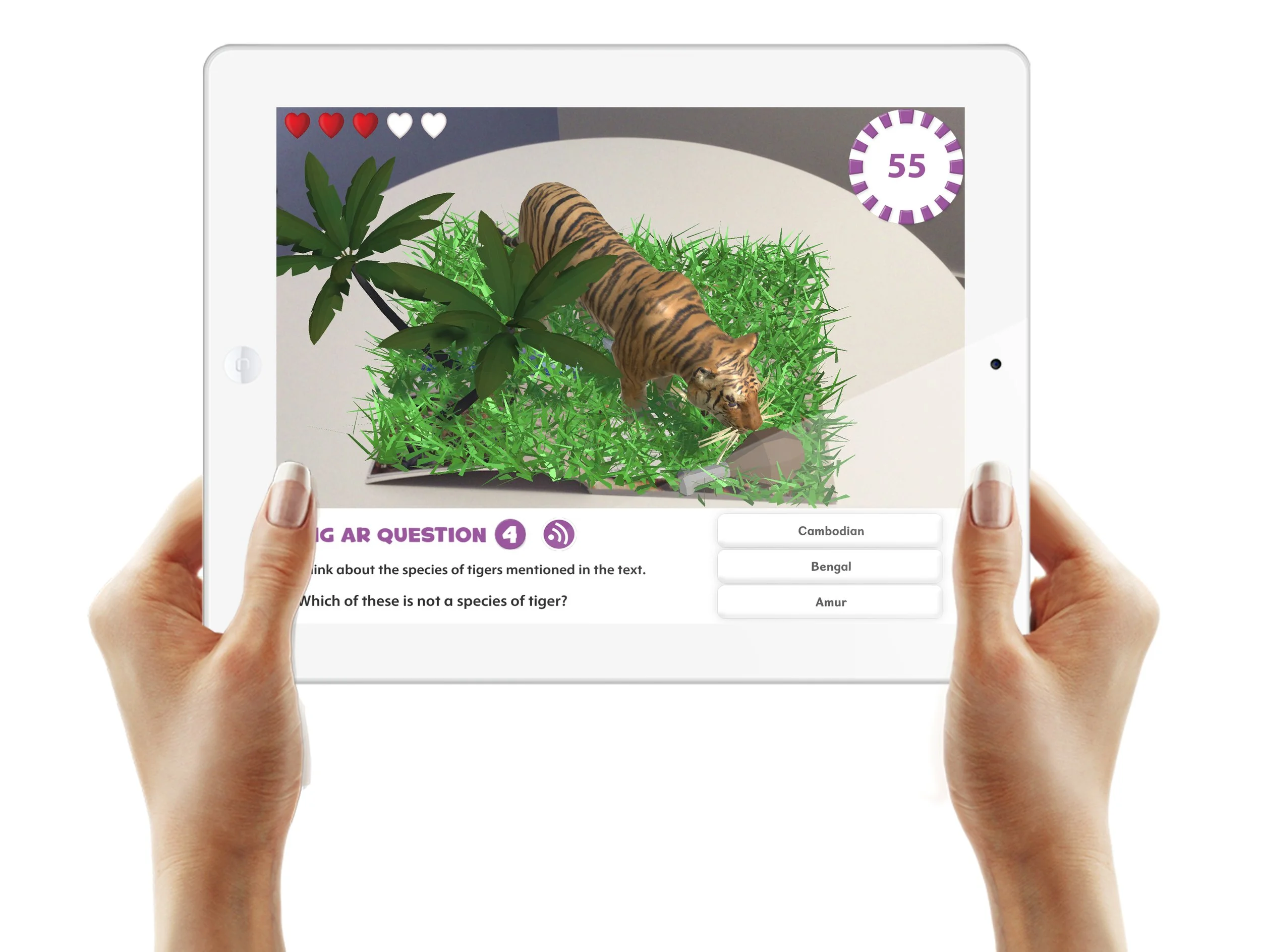
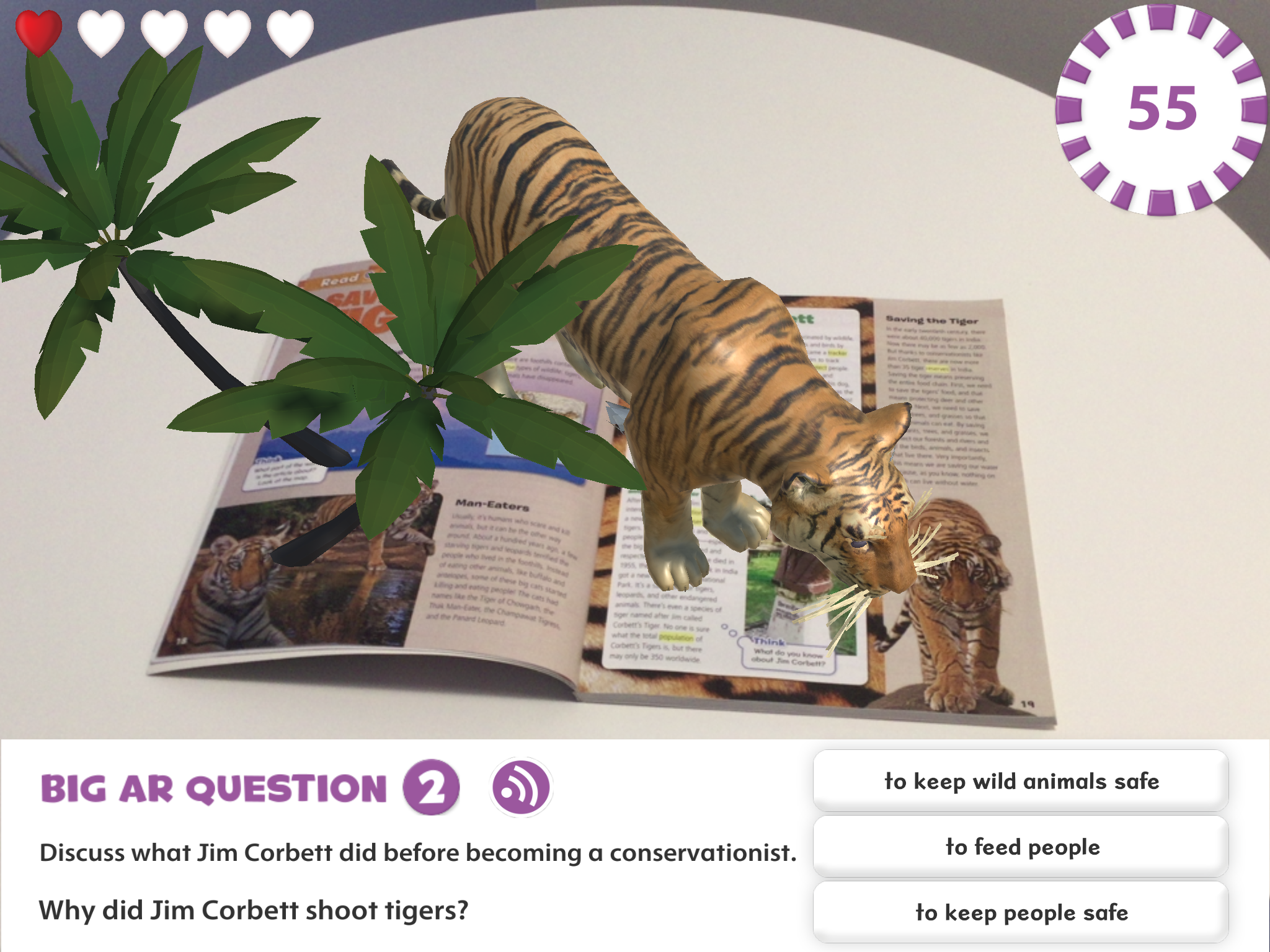
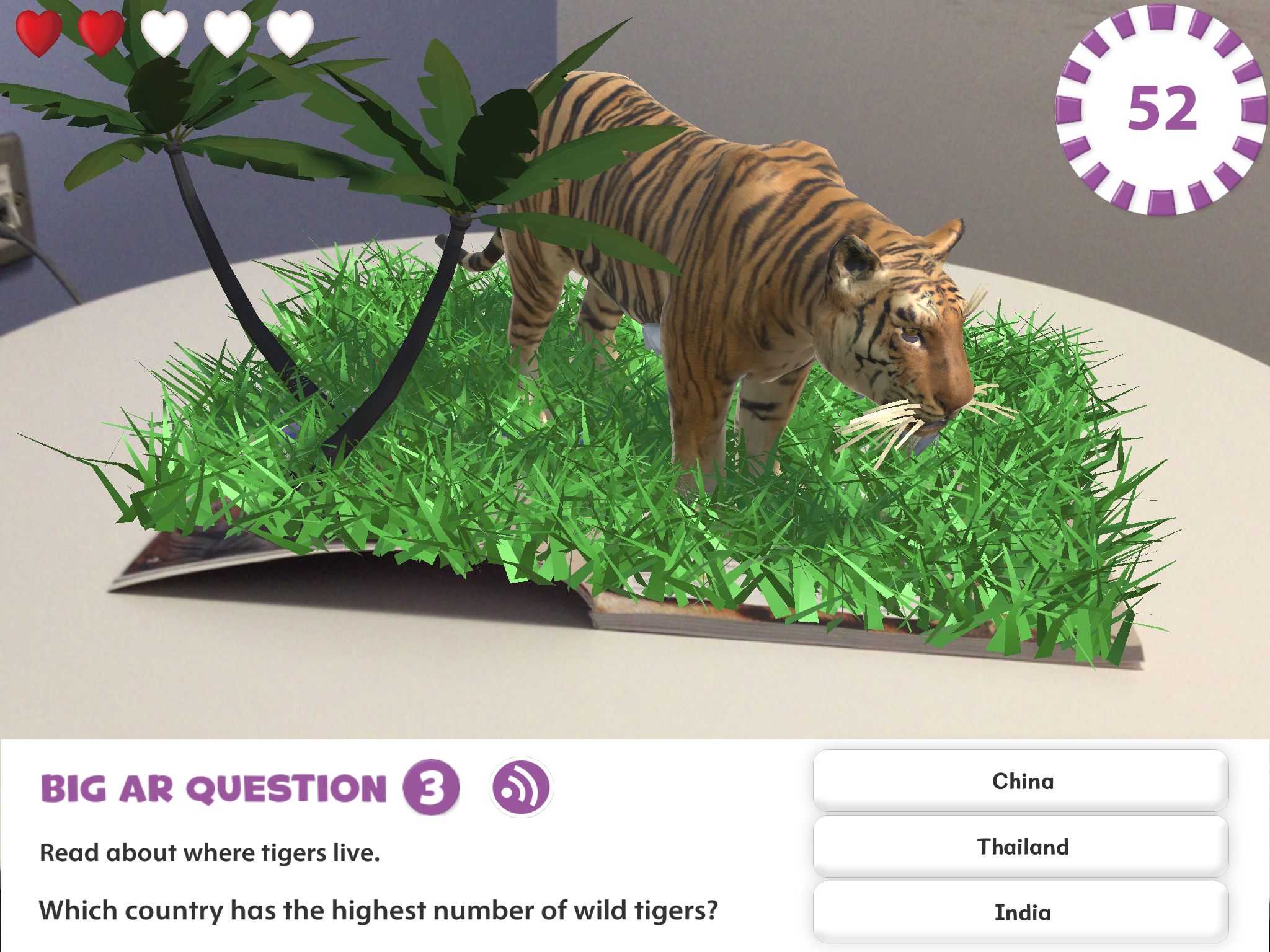
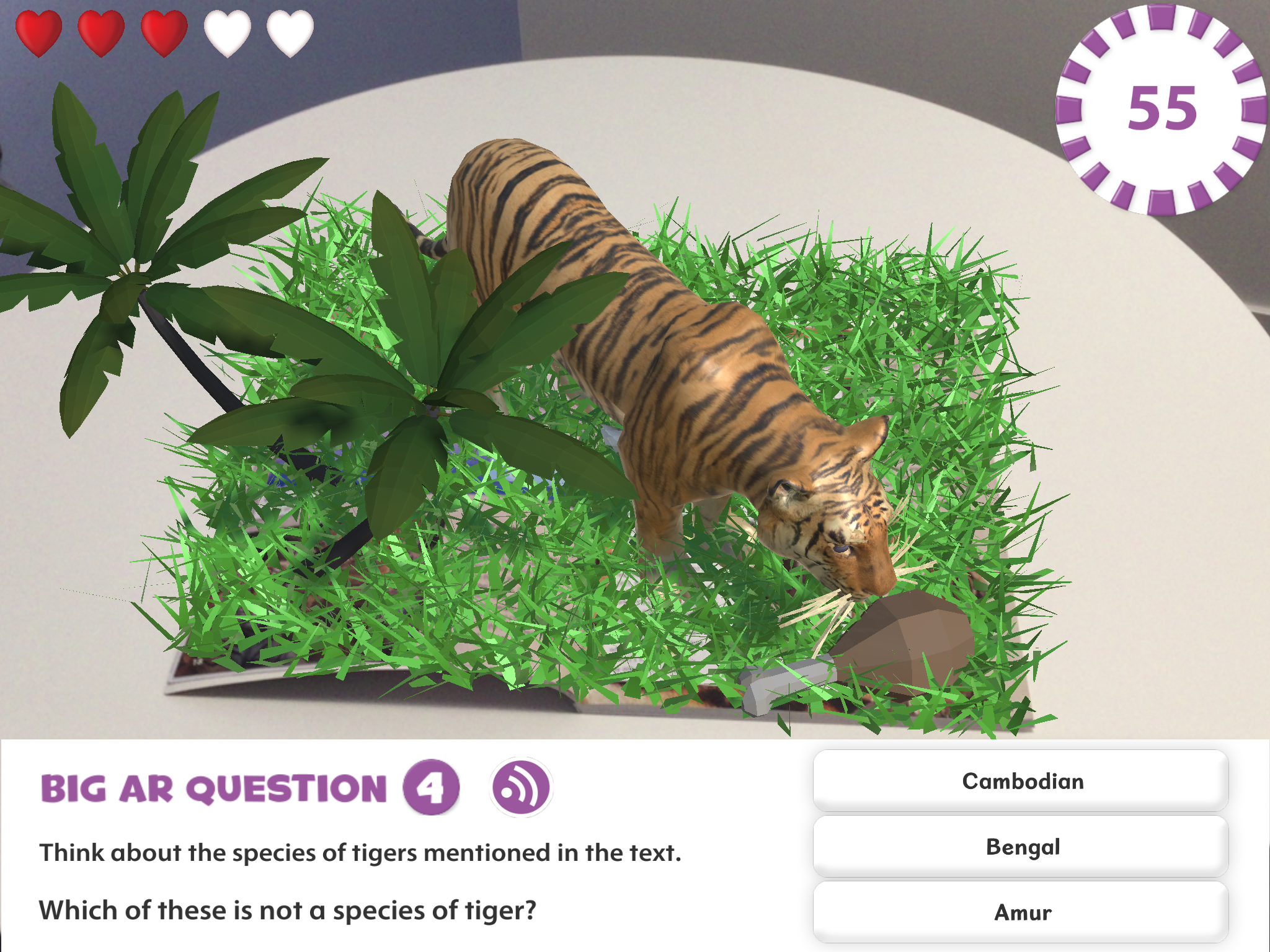
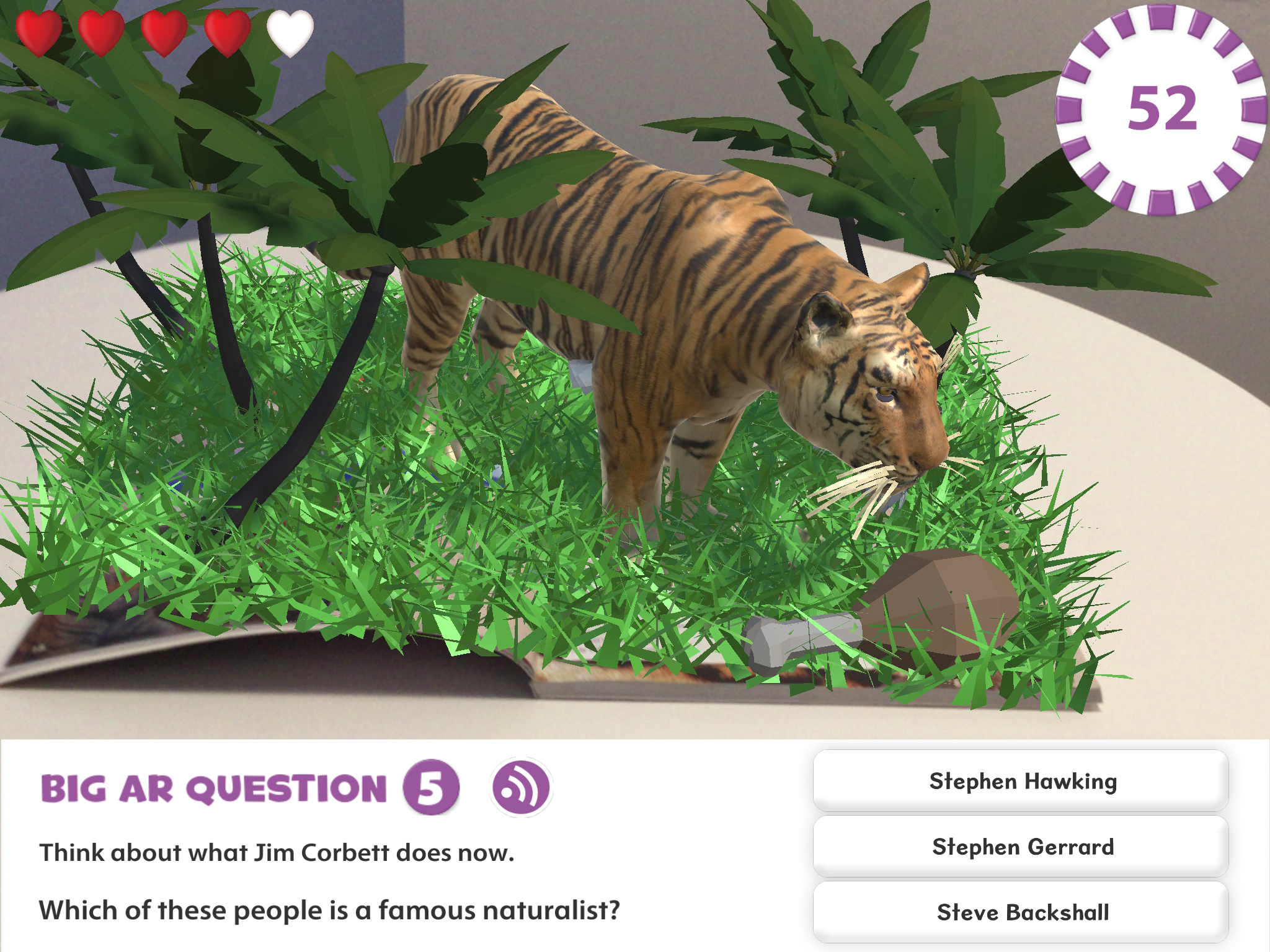
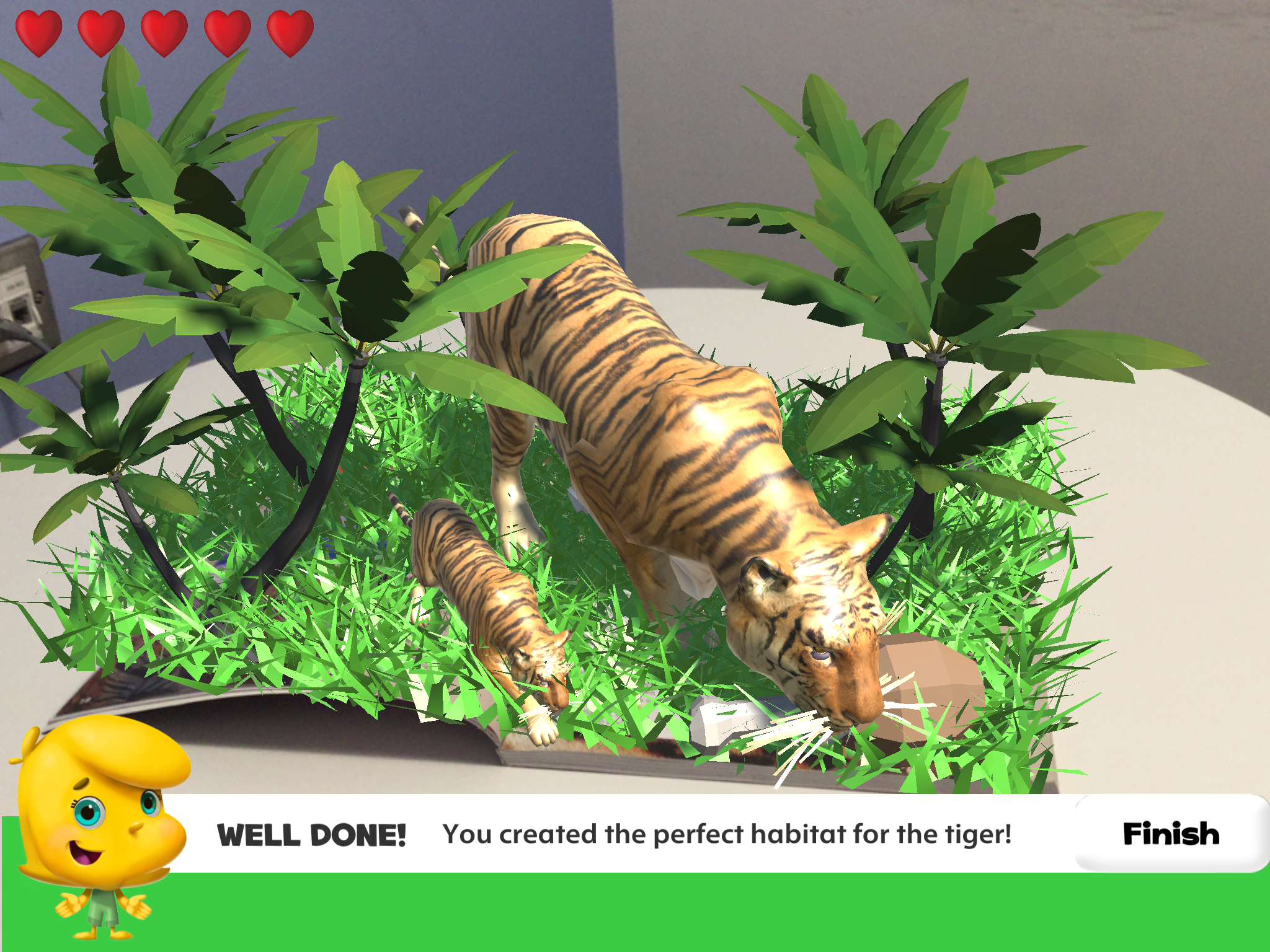
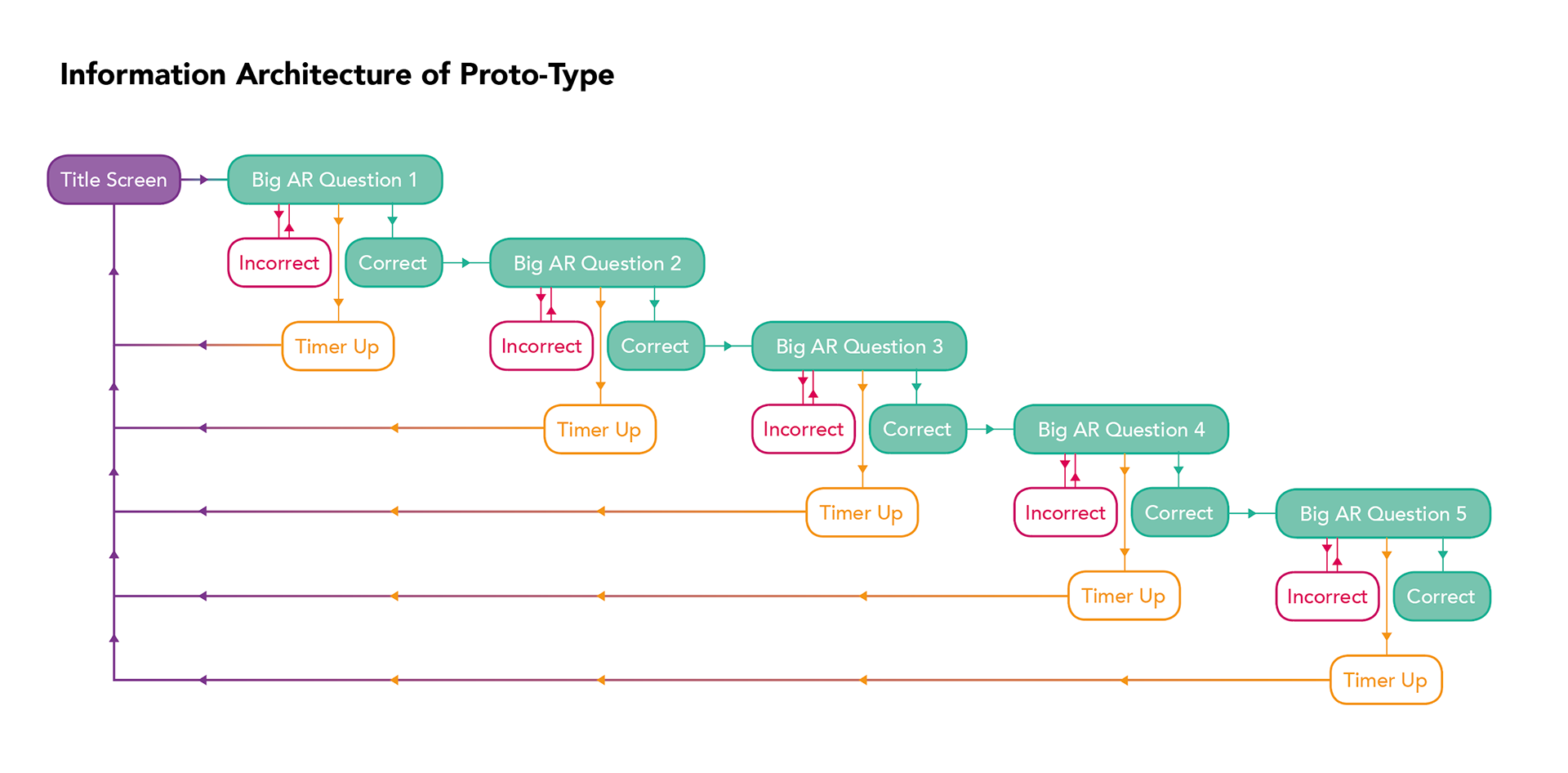
Pupils work through five multiple-choice questions on the tiger text they’ve just read. Each correct answer adds an item to the tiger’s environment, so by the end the class has built the habitat the text describes.
Design decisions
Five questions, to keep cognitive load low. Drawing on Miller’s Law, which says people can hold only a limited number of items in working memory at once, I kept the quiz to five questions. That’s short enough for a Year 6 class to recall what they’d just read and stay focused.
Building up habitat, not points. Points are abstract. Building the habitat links the reward directly to what pupils had just read about tiger conservation, so by playing they could feel their own actions were part of protecting tigers.
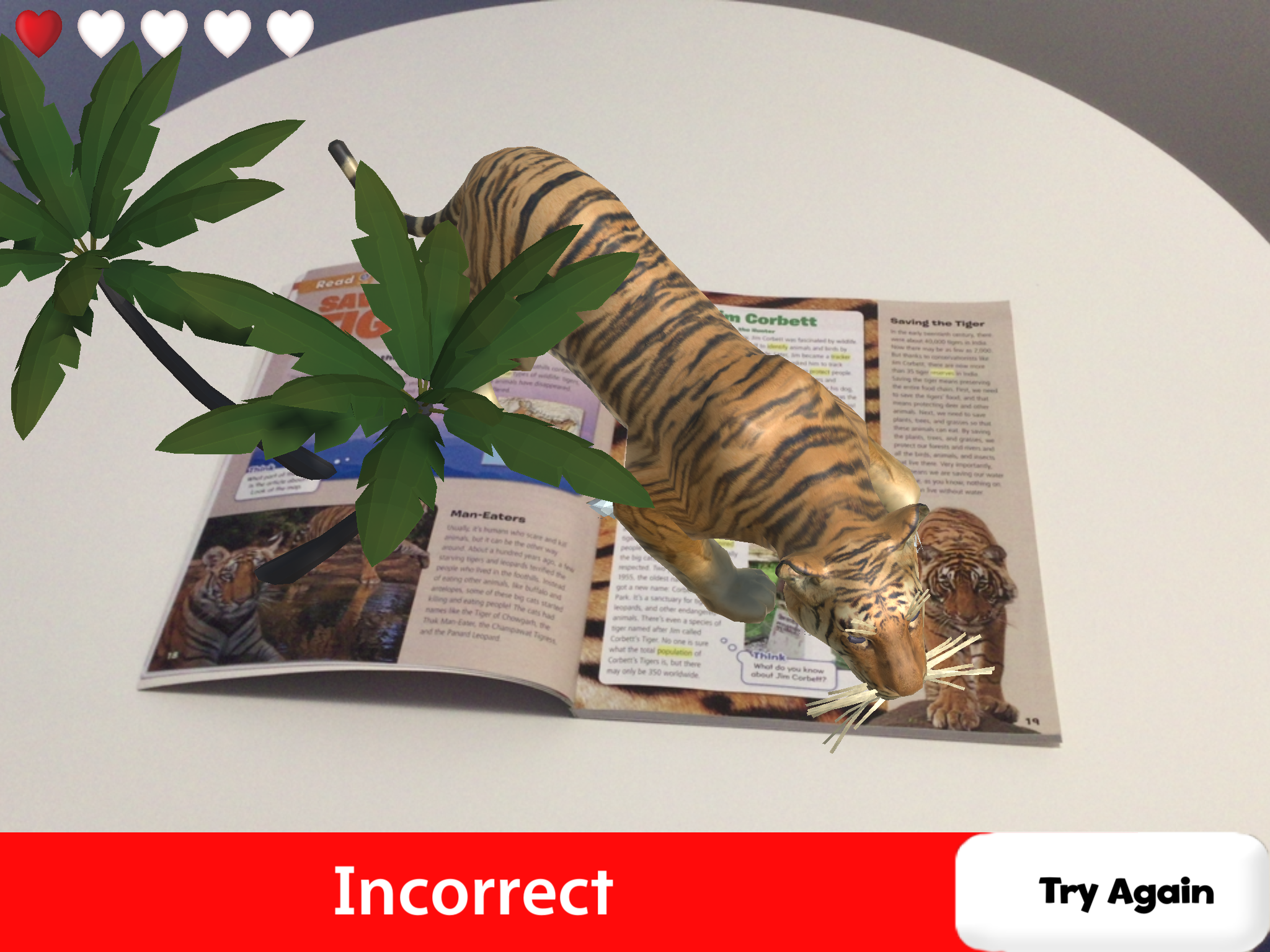
Gentle failure on wrong answers. A wrong answer costs a heart rather than ending the quiz, and the pupil can try again, keeping the stakes low.
A timer, softened by the class. The timer adds pace: if it runs out, the quiz restarts from the beginning. A timer can be stressful for anxious pupils, so the quiz was run as a whole-class activity, with the iPad connected to the interactive whiteboard. Classmates helped work out the answers, so the pressure wasn’t on one child alone.
Testing in the Field
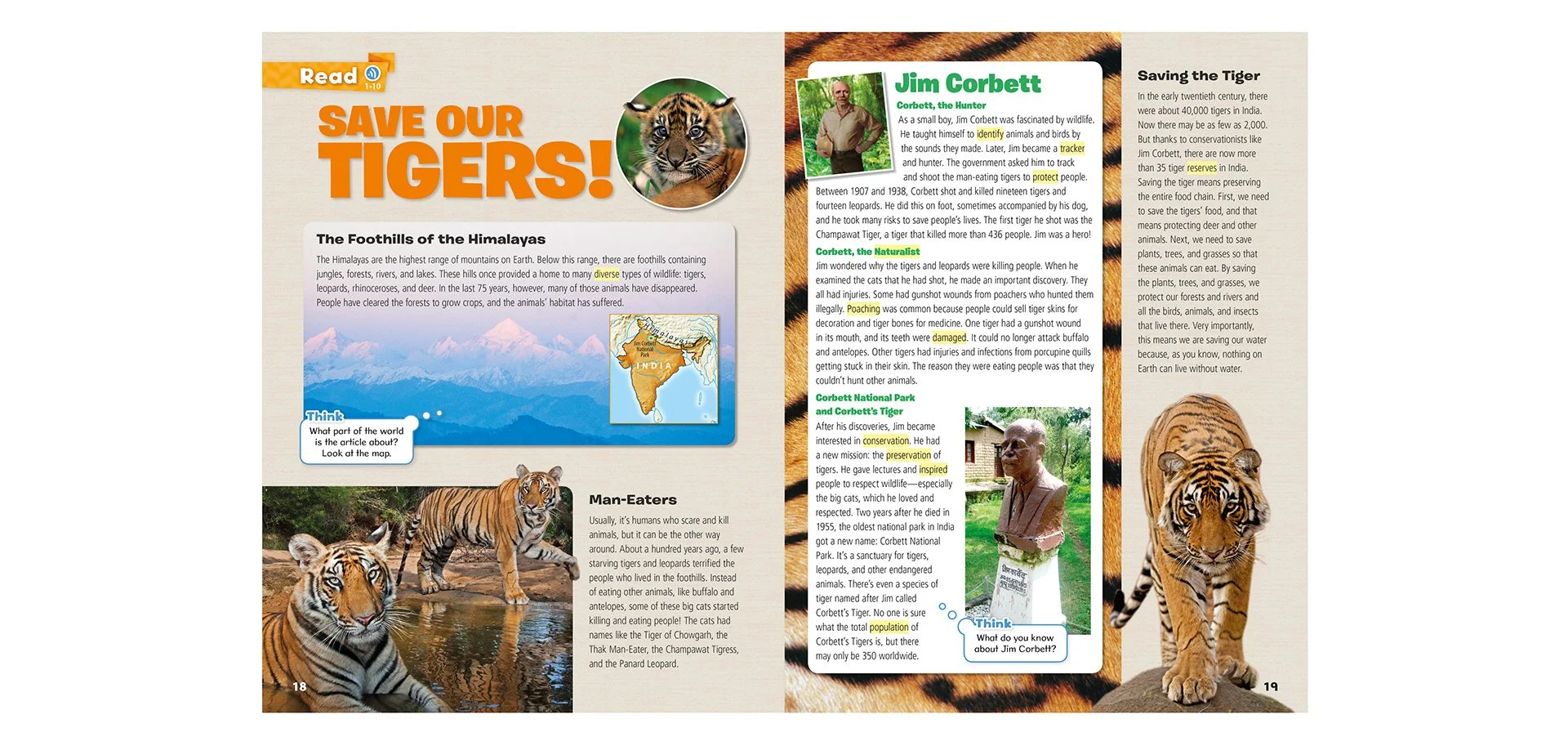
Two other designers and I tested the prototype with a Year 6 class of 29 pupils at a local primary school, as part of a structured lesson:
Pupils read the tiger text in the book.
The class held a question-and-answer session on what they’d learned.
The app was placed over the double-page spread to reveal the quiz. Pupils took turns directing it at the front of the class, with the iPad connected to the interactive whiteboard.
Pupils completed a short questionnaire, and the teacher gave written feedback.
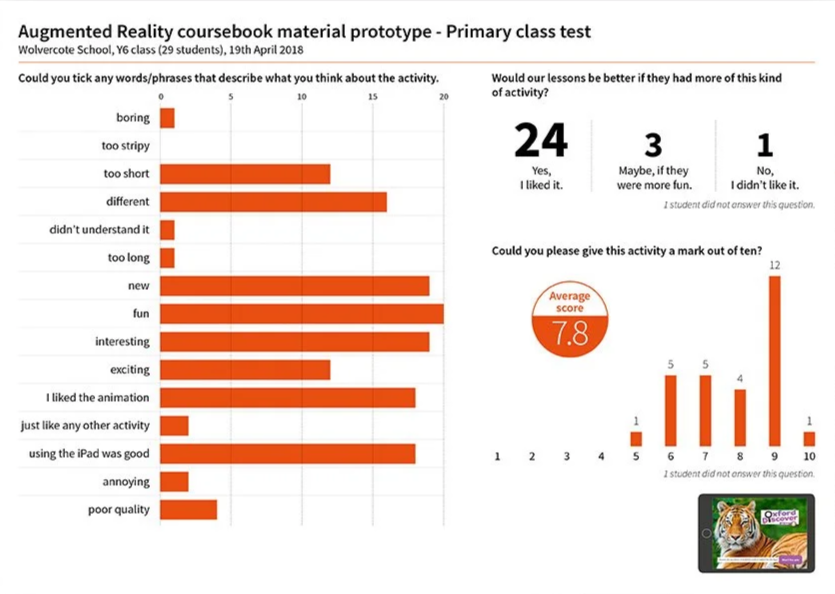
24 of 29 pupils said they’d like more lessons like it. 7.8 / 10 was the average rating. Fun, new and interesting were among the most-ticked words on their feedback sheet.
The teacher found it easy to run: plug the iPad into the whiteboard and go.
What this can and can’t tell us. One class and one lesson is a first signal, not proof. “New” and “different” were among the top words, so novelty may be flattering the results, and I didn’t measure whether pupils learned more.
What We Learnt
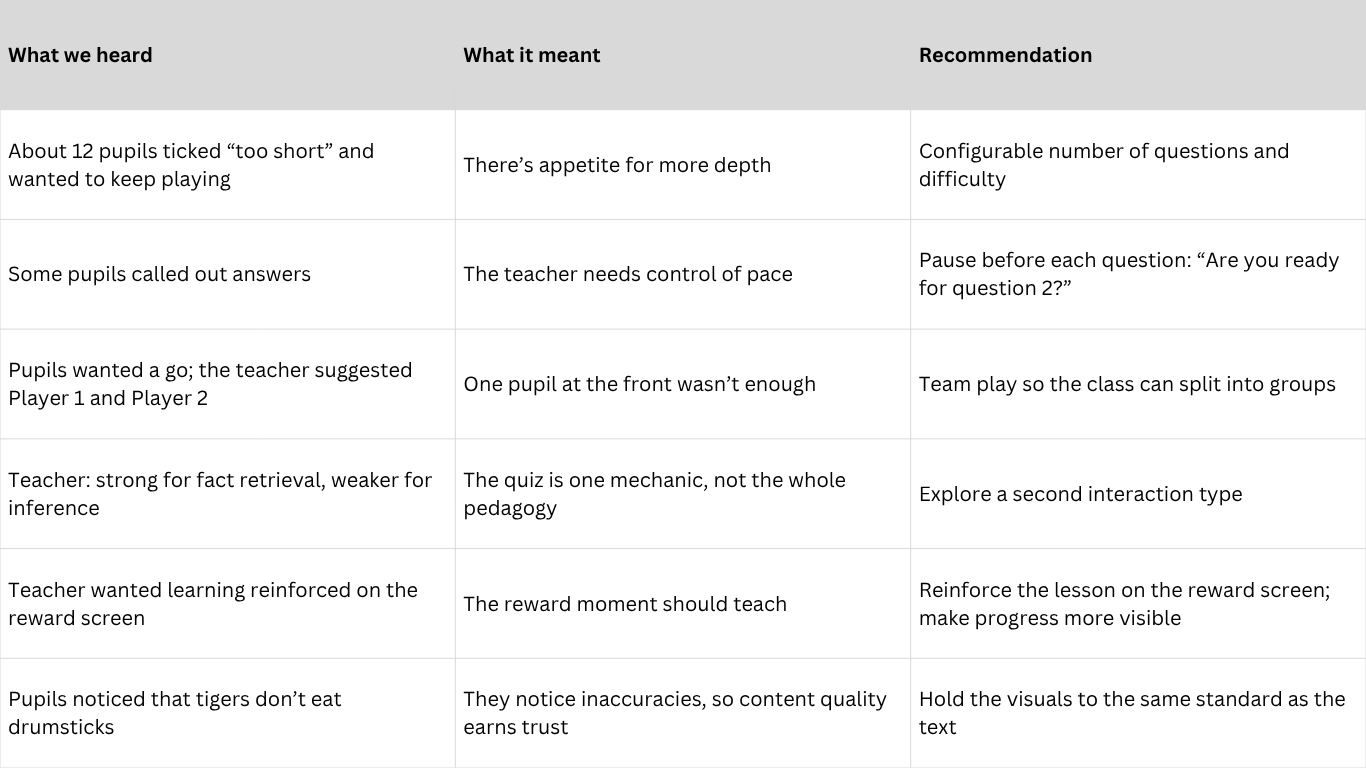
Pupils loved it, and the teacher saw potential but wanted more control over pace and depth.
-
"Tigers don't eat drumsticks in the wild, I thought they hunt antelopes!"
We chose to censor the gore but it turned out thats what the children wanted.
-
"I want to play on it some more!"
A downside of the test was children wanted to stay play indoors on the app instead of going outside to play.
-
"I want to have a go"
Connecting the ipad to the large screen helped facilitate a collaborative classroom setting but children wanted to use the app themselves.
-
"The Augmented Reality is phenomenal and the class really loved it."
The app achieved the WOW factor to inspire continued learning.
From Prototype to Partnership
The findings informed OUP’s innovation team, who were tasked with finding an external partner to create a scalable solution. In January 2019, OUP announced a collaboration with MXRi to bring AR to its English language courses, with learners scanning their book to bring the page to life. When ELT sector priorities needed my focus elsewhere, I handed the project over with the research findings and my recommendations.
Design principles the prototype pointed to
-
Augment the page, don’t replace it.
Print isn’t leaving classrooms, and the AR layer worked because it sat over the printed spread: 24 of 29 pupils wanted more lessons like it, and the teacher saw it bringing engagement into the classroom alongside the book rather than instead of it.
-
Every reward should reinforce the content.
Building the habitat linked the reward to the tiger text, but the teacher wanted the reward screen to teach as well, for example by explaining why trees matter to tigers. Pupils also spotted that tigers don’t eat drumsticks, so the visuals need the same accuracy as the text.
-
Zero setup for teachers.
Adoption lives or dies on a real timetable. The teacher noted that minimal setup, plugging the iPad into the whiteboard and pointing it at the page, made the app quick to use without losing the class’s focus.
-
Teachers control the pace.
Some pupils were over-eager and called out answers, and the teacher suggested a pause before each question (“Are you ready for question 2?”) and a team mode so the class could split into groups.
Taking into consideration the learnings, I advised a longer trial across more classes, as a way to measure learning, and to provide a second interaction type for inference and deduction.
Next Steps